
Drainage Services: How to Fix Standing Water Fast

Table of Contents
Why Standing Water Is a Real Problem
Standing water is more than a messy yard. It can kill grass, weaken soil, and push water toward your home. It also attracts bugs and makes outdoor areas hard to use.
Most puddles are not random. They happen because the land is sloped wrong, the soil is too tight, or water has no clear path out.
Many homeowners start searching for drainage services and even wonder if a septic tank is part of the issue. In this guide, we’ll keep it simple and help you spot what’s really going on.
How to Spot the Source Fast
Here’s the fastest way to figure out the cause.
1) Check the timing
Water shows up during rain: surface flow
Water shows up later: trapped water or poor soil drainage
Water shows up in dry weeks: possible spring or underground issue
2) Check the location
Near the house: grading or downspouts
Middle of the yard: low spot
Near driveway: runoff or compacted base
3) Check the pattern
If it happens in the same spot every time, it has a clear cause.
A Simple 24-Hour Check You Can Do
Before calling anyone, do this quick check. It takes less than 10 minutes.
Walk the yard right after rain
Walk again 12 to 24 hours later
Note where water sits
Check downspouts
Look for low dips and soft ground
Take photos if you can
Photos help a contractor understand the problem faster.
The Most Common Causes (And the Real Fix)
Let’s get straight to it. These are the usual causes of standing water.
Wrong slope
If the land slopes toward the house, water will sit.
Fix: regrading to push water away.
Downspouts dumping too close
If your downspouts empty beside the home, the yard gets soaked fast.
Fix: extend the downspouts to a better spot.
Hard, compacted soil
Some soil holds water like a bowl. Clay is a common culprit.
Fix: improve grade and create a clear water path.
Driveway runoff issues
A driveway can trap water if it’s built like a wall.
Fix: reshape edges and guide water out.
Low spots in the yard
This is the classic puddle that never goes away.
Fix: fill and grade properly so water sheds.
Quick Fix vs. Proper Fix
Everyone wants the cheap fix. That’s normal.
But drainage is one of those problems where “cheap now” can cost more later.
Quick fixes (short-term)
Adding soil to a puddle spot
Tossing gravel into low areas
Digging a random trench
These can help for a while. But the water often returns.
Proper fixes (long-term)
Regrading the yard
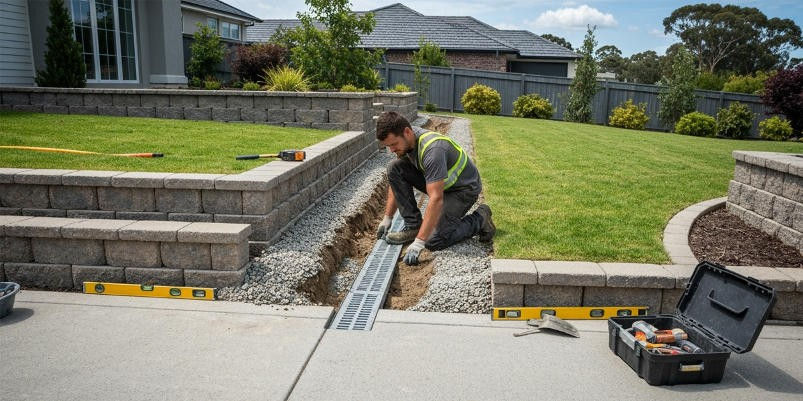
Building a controlled path for runoff
Using the right fill and compacting it properly
Here’s a quote that sums it up: “Water always wins. You just have to give it a better route.”
What a Good Drainage Plan Includes
Key things a pro looks at:
Where water comes from
Where it gets trapped
Where it should exit
How to stop erosion
How to protect driveways and access areas
A good plan is not complicated. It’s just smart.
When It’s Not Just a Water Issue
Sometimes standing water is not only a grading problem.
It can also be caused by:
Broken underground lines
High groundwater
Hidden springs
Water flowing from nearby lots
This is also the point where some homeowners worry about septic issues. That’s fair. If you notice smell, soggy ground that never dries, or slow drains inside, that’s when you should call the right specialist.
A Simple Action Plan
If you want a clear way forward, use this order:
Fix obvious water dumping (downspouts and runoff)
Mark where water sits after rain
Decide what you want (dry yard, better access, fewer muddy areas)
Get a proper plan and stop guessing
FAQs
1) Why does my yard flood but my neighbor’s yard doesn’t?
Even small slope changes matter. Your yard may be lower, flatter, or more compacted. It’s not always the rain. It’s often the layout.
2) What’s the biggest mistake people make with standing water?
They fix the puddle, not the cause. If you fill a low spot without correcting the slope, the water often moves somewhere worse.
3) How do I know if I need regrading?
If puddles return in the same place after every rain, you likely need grading. If it only happens during big storms and dries fast, the fix may be smaller.
4) Can a driveway make drainage worse?
Yes. If the driveway blocks water flow, it traps runoff. A driveway needs a clear water exit route, or it becomes a dam.
5) What’s the best long-term fix?
A solution that guides water away and stays stable over time. That usually means correct grading and proper compaction, not temporary patchwork.
Final Remarks
At Barfoot Contracting, we’ve seen one truth again and again: standing water is a sign your land needs a better path for runoff.
We’ve been in business for more than two decades, and we know how to shape land the right way. If you’re tired of guessing and tired of puddles coming back, we can help you get a real fix that lasts.
Want a clear plan and a clean, dry yard? Reach out to Barfoot Contracting and let’s talk about what’s happening on your property.


Comments